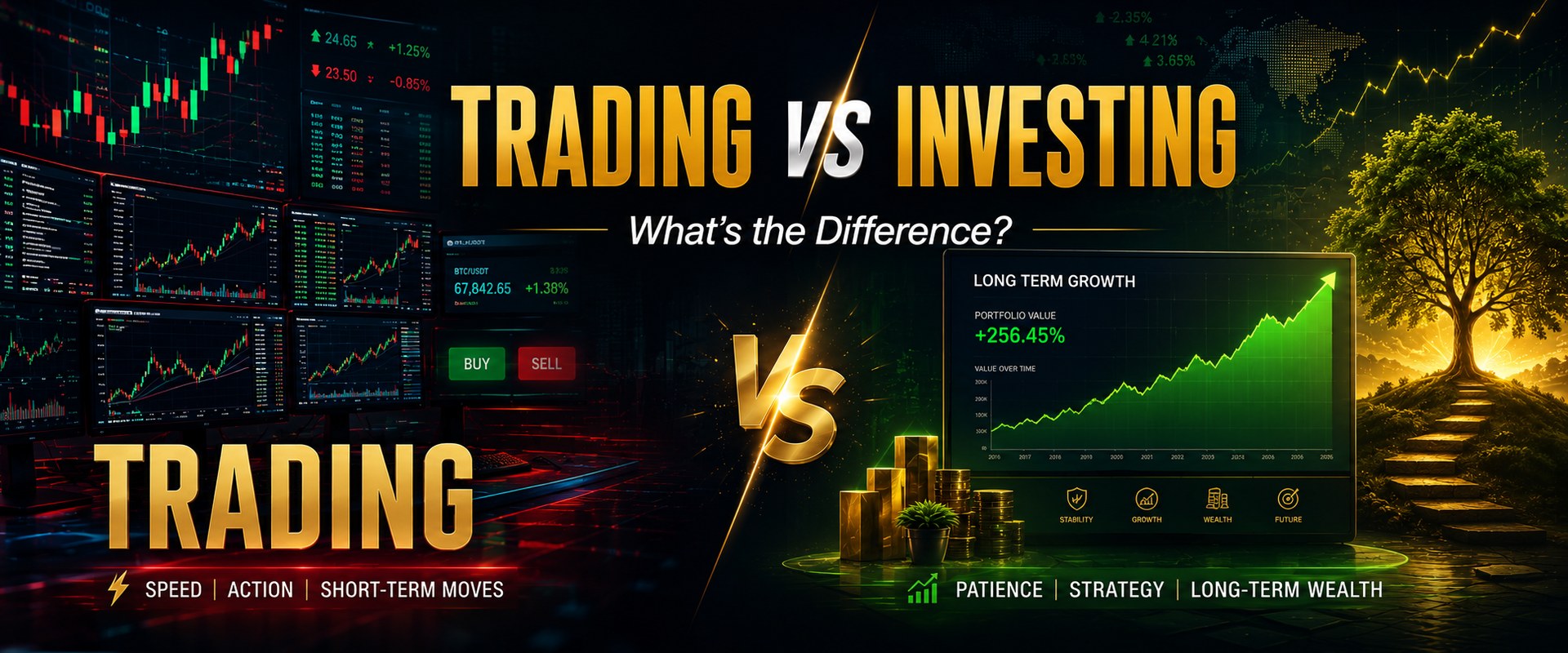
Trading vs Investing: Why Does It Matter?
Did you know you can make money in the market in two very different ways? Trading vs investing is not about which one is always better. It is about how you want to use your money and your time.
Both trading and investing involve buying assets, such as stocks. But the goal can be very different. Traders often look for short-term price moves. Investors usually think about long-term growth.
If you are new to the market, this difference is very important. Knowing it can help you make smarter choices and avoid costly mistakes.
This topic is covered in more depth on Daily Duniya, your home for daily market updates, trading news, stock updates, and simple financial content.
Trading and Investing: The Basic Difference
Trading means buying and selling an asset to try to earn money from price changes. A trader may hold a stock for minutes, hours, days, or weeks.
Investing usually means buying an asset and holding it for a much longer time. An investor may hold a stock for years because they believe the company can grow.
Think of it this way:
- Trading: Focus on shorter price moves.
- Investing: Focus on long-term growth.
- Trading: More frequent buying and selling.
- Investing: Usually fewer transactions.
- Trading: Requires close attention to the market.
- Investing: Often needs more patience.
Neither path is a guaranteed way to make money. Both have risks, and both require learning.
How Does Trading Work?
A trader tries to benefit from changes in market prices. They may study charts, company news, market trends, and other signals before making a decision.
For example, imagine a stock is trading at $50. A trader believes the price may rise soon. They buy the stock and later sell it at $55.
The $5 difference is the possible profit before fees and taxes. But the price could also fall. If it drops to $45, the trader may face a loss.
Trading can happen in many ways. Some traders make several trades in one day. Others hold positions for a few days or weeks.
Common trading styles include:
- Day trading: Buying and selling within the same day.
- Swing trading: Holding a trade for several days or weeks.
- Short-term trading: Trying to benefit from quick price changes.
Trading can be exciting, but it can also be stressful. You need discipline and a clear plan.
How Does Investing Work?
Investing takes a longer view. Instead of trying to benefit from every small price move, an investor may buy a strong company and hold it for years.
The idea is simple. If the company grows over time, its value may grow too.
Some investors may also receive dividends. A dividend is money a company may pay to its shareholders from its profits.
For example, you buy shares in a company because you believe its business will become stronger over the next five or ten years. You do not worry about every daily price change.
Investors often study:
- Company performance
- Business growth
- Industry trends
- Long-term market trends
- Company earnings
This does not mean investing is risk-free. Stock prices can fall, companies can struggle, and markets can have bad years.
The key difference is the time horizon. A long-term investor may be willing to wait through short-term market drops.
Trading vs Investing: Key Differences You Should Know
The difference between trading and investing becomes clearer when you compare their main features.
| Feature | Trading | Investing |
| Time | Short to medium term | Long term |
| Main goal | Profit from price moves | Build wealth over time |
| Buying and selling | More frequent | Less frequent |
| Market attention | Often high | Usually lower |
| Research | Charts, news, price action | Business and long-term growth |
| Risk | Can be high | Still has risk |
| Patience | Important | Very important |
Trading often requires more active decisions. You may need to watch stock updates and trading news regularly.
Investing can be slower. You may spend more time researching a company before buying and then allow your investment time to grow.
This is why choosing between trading and investing should depend on your goals, skills, time, and comfort with risk.
Which One Is Better for You?
There is no single answer. The right choice depends on your situation.
If you enjoy studying charts, following market news, and making active decisions, trading may interest you. But you must understand that frequent trading can lead to frequent losses if you do not have a strong plan.
If you prefer patience and long-term goals, investing may be a better fit. You can focus more on the strength and future of a company instead of watching every price move.
Ask yourself these questions:
- How much time can you give the market?
- Can you handle short-term losses?
- Do you understand the risks?
- What is your money goal?
- Do you prefer active or patient decisions?
Do not choose trading just because you see someone making quick profits online. Social media often shows wins but does not show every loss.
Good money decisions are based on knowledge, planning, and discipline.
Smart Tips Before You Start
Whether you choose trading or investing, start with education. Learn how markets work before putting real money at risk.
Start small if you are new. Never use money that you need for rent, food, bills, or other important needs.
A few simple rules can help:
- Learn before you trade or invest.
- Have a clear money goal.
- Understand the risk before buying.
- Do not follow random market calls.
- Avoid making decisions because of fear or excitement.
- Keep learning from reliable market analysis.
- Review your decisions and learn from mistakes.
Remember, the market does not reward impatience. It rewards people who understand what they are doing and manage their risk carefully.
For more simple market lessons, follow our Bull & Bear Whispers Instagram page for quick market tips, easy charts, trading ideas, and daily highlights. It is a simple way to stay connected with what is happening in the market.
Trading and Investing Can Both Have a Place
Trading vs investing is not a battle between two choices. They are two different approaches to the market.
Trading focuses more on shorter price movements. Investing focuses more on long-term growth.
Some people may choose one approach. Others may use both, depending on their goals and knowledge. The important thing is to understand what you are doing before you put your money at risk.
Do not chase quick profits. Do not invest blindly. Build your knowledge first, make a plan, and stay disciplined.
The market will always bring new opportunities. Your job is to be ready for them.
Want more market knowledge without the complicated language? Join the Bull & Bear Whispers WhatsApp channel for exclusive updates, real-time alerts, and direct access to more trading and investing content like this.
Learn first. Plan smart. Trade or invest with confidence.