If you are new to trading, you have probably heard the term “stop loss” more than once. It sounds technical, but the idea behind it is actually very simple. Before you put real money into any trade, it helps to understand how a stop loss works and why so many traders use one. At Daily Duniya, we believe beginners should understand the basics of risk before they start trading, and stop loss is one of the first tools worth learning about.
In this guide, we will explain what a stop loss is, how it works, why it matters, and how beginners can use it the right way.
What Is a Stop Loss in Trading?
A stop loss is an instruction you give to close a trade automatically if the price moves against you by a certain amount.
In simple words, it is like a safety limit. You decide beforehand, “If the price falls to this level, close my trade automatically.” This way, you do not have to watch the market every second, and you avoid losing more money than you planned.
A stop loss does not guarantee you will never lose money. It simply helps you control how much you might lose on a single trade.
How Does a Stop Loss Work?
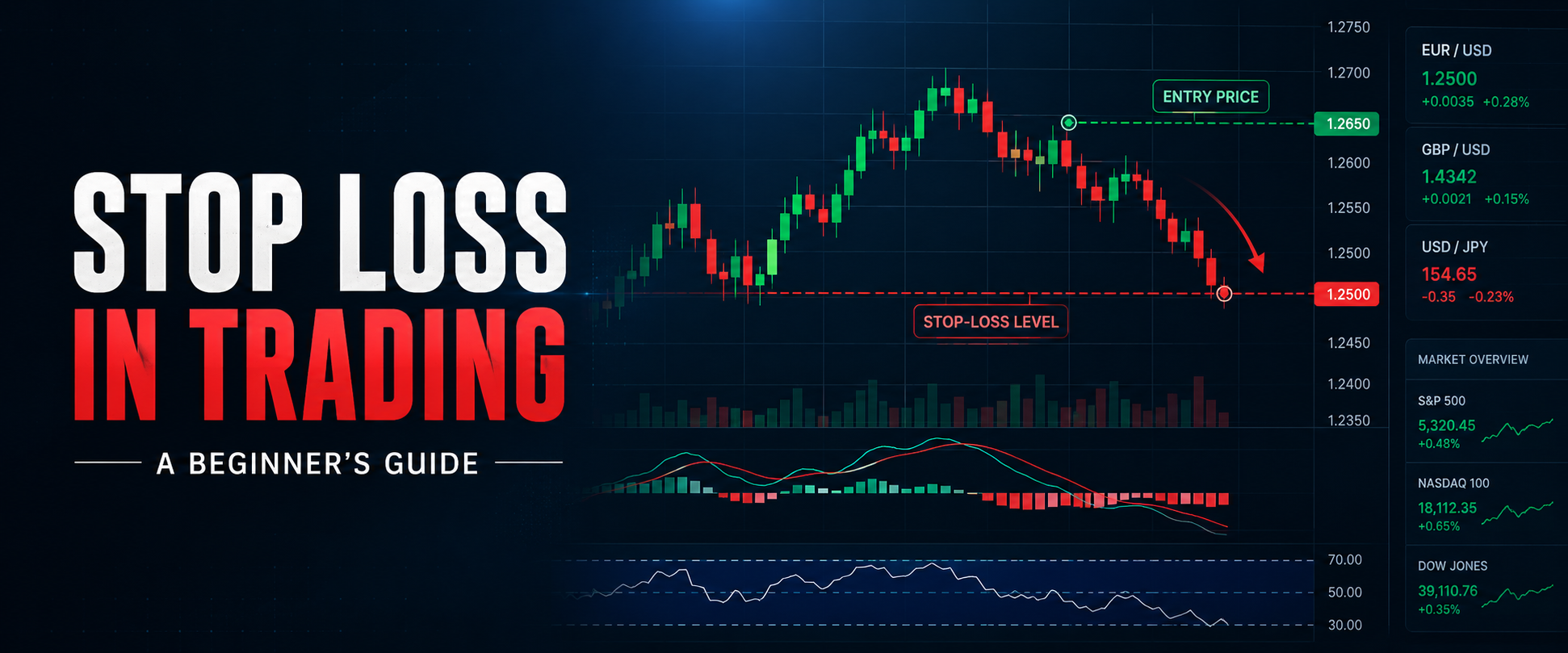
When you open a trade, you can also set a stop-loss level. This is a specific price at which your trade will close automatically if the market moves in the wrong direction.
Here is a simple example:
Imagine you buy a stock at 100 rupees. You decide you are not willing to lose more than 5 rupees on this trade. So, you set your stop loss at 95 rupees.
- If the price stays above 95, your trade continues as normal.
- If the price falls to 95, the stop loss triggers, and your trade closes automatically.
This means your loss is limited to 5 rupees per share, instead of continuing to fall if the price keeps dropping.
The exact process may look slightly different depending on the trading platform you use, but the core idea remains the same across most markets.
Why Is Stop Loss Important?
A stop loss plays a useful role in several ways:
- Limiting potential losses It stops a losing trade from getting worse than you expected.
- Protecting trading capital Your trading capital is the money you use to trade. Protecting it means you can continue trading in the future instead of losing too much too quickly.
- Reducing emotional decisions When a trade is going against you, it is easy to panic or hope the price will “come back.” A stop loss removes this emotional pressure because the decision is already made in advance.
- Helping with risk management A stop loss is one part of a bigger idea called risk management, which is about controlling how much you risk on each trade.
- Creating a trading plan Using a stop loss encourages you to think through your trade before entering it, instead of trading randomly.
If you want to understand this topic in more depth, our guide on risk management explains how stop loss fits into a trader’s overall strategy.
Types of Stop Loss Orders
There is more than one way to set a stop loss. Here are three common types beginners should know:
Fixed Stop Loss This is a stop loss set at a specific price or a specific amount away from your entry price. It does not change once it is set, unless you manually update it.
Percentage-Based Stop Loss Instead of picking a fixed price, some traders set their stop loss as a percentage of the trade value. For example, a trader might decide never to risk more than 2% on a single trade.
Trailing Stop Loss A trailing stop loss moves along with the price when a trade is going in your favor, but it stays fixed if the price moves against you. This can help protect profits while still allowing the trade room to grow.
Each type has its own use, and beginners often start with a simple fixed stop loss before exploring the others.
How to Use a Stop Loss as a Beginner
Using a stop loss the right way involves more than just picking a random number. Here are some practical steps:
- Understand the trade setup. Know why you are entering the trade before deciding where to place your stop loss.
- Decide how much you are willing to risk. Set a clear limit in your mind before you enter the trade, not after.
- Choose a logical stop-loss level. Base it on the price chart and the trade setup, not on a random guess.
- Place the order correctly. Make sure your stop loss is set at the right price on your trading platform.
- Avoid moving the stop loss because of emotions. If the price gets close to your stop loss, resist the urge to move it further away out of fear or hope.
- Review the trade afterward. Once the trade is closed, look back and see whether your stop-loss placement made sense.
Learning to read price charts can also help you place a more logical stop loss. If you are interested, our guide on candlestick charts is a good starting point for beginners.
Many new traders also follow educational pages and communities to keep learning these basics step by step. You can follow Bull & Bear Whispers on Instagram for simple explanations of trading concepts like this one.
Common Stop Loss Mistakes Beginners Make
Even with a good idea, beginners often make certain mistakes when using a stop loss:
- Placing the stop loss too close to the entry price. This can cause the trade to close too early, even from normal price movement.
- Placing it randomly. A stop loss should be based on logic, not guesswork.
- Risking too much on one trade. Even with a stop loss, risking a large portion of your capital on a single trade is risky.
- Moving the stop loss because of fear or hope. This defeats the purpose of setting one in the first place.
- Trading without a plan. A stop loss works best as part of a clear trading plan, not as an isolated tool.
- Believing a stop loss guarantees no loss. In fast-moving markets, prices can sometimes skip past a stop-loss level, especially during high volatility. A stop loss reduces risk, but it does not remove it completely.
Stop Loss vs Take Profit
Beginners often confuse stop loss with take profit, but they serve opposite purposes.
| Feature | Stop Loss | Take Profit |
| Purpose | Limits how much you can lose | Locks in profit at a target level |
| Triggered when | Price moves against you | Price moves in your favor |
| Main goal | Risk control | Securing gains |
Both tools are usually used together. A stop loss protects you from large losses, while a take profit helps you exit a trade once your profit target is reached.
Stop Loss and Risk Management
A stop loss is not a standalone strategy. It works best as one piece of a wider risk-management plan.
Risk management involves deciding how much to risk per trade, how many trades to take, and how to protect your overall capital over time. A stop loss is simply the tool that puts your risk decisions into action.
According to Investopedia, a widely used financial education resource, a stop-loss order is designed to automatically sell a security once it reaches a certain price, which helps limit an investor’s loss on a position. This reflects why stop-loss orders are considered a basic building block of risk management, rather than a complete strategy on their own.
Should Every Beginner Use a Stop Loss?
This is a common question, and the honest answer is balanced.
A stop loss can help beginners manage risk and avoid large, unexpected losses. It is a practical tool that many experienced traders rely on. However, it does not eliminate the possibility of loss, and it does not guarantee that a trade will go your way.
Whether or not to use a stop loss on every trade often depends on your trading style, the market you are trading in, and your own risk tolerance. What matters most is that beginners understand the concept clearly and think about risk before placing any trade, rather than after.
Conclusion
A stop loss is a simple but powerful tool that helps traders limit potential losses and manage risk more carefully. It works by automatically closing a trade once the price reaches a level you have decided in advance. While it does not guarantee protection from every loss, it is one of the most practical tools a beginner can learn before trading with real money.
If you are just starting out, take the time to understand how a stop loss works, practice setting one, and build it into a wider risk-management plan.
For more simple trading and finance guides, follow the Bull & Bear Whispers WhatsApp Channel.