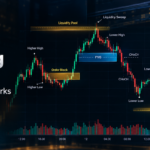
Before risking real money, traders should test their ideas on historical data in trading. This process, called trading strategy backtesting, shows how a set of rules would have performed in the past. At Daily Dunia, we explain how to backtest a trading strategy in simple steps so beginners can learn the process without unrealistic promises.
Backtesting is not proof that a strategy will succeed in the future. It is a way to study past behavior, find weaknesses, and build a more disciplined approach before using a trading backtest for beginners on live markets.
What Is Backtesting in Trading?
Backtesting in trading means applying a strategy’s rules to past price data to see what trades it would have made. It is like a “replay” of the market using your rules.
You use historical price data to:
- Identify entry and exit points based on your rules.
- Record each hypothetical trade.
- Calculate profit or loss after costs.
This is the core of backtesting trading strategies.
Why Should Traders Backtest a Strategy?
Traders backtest a strategy to:
- Understand how rules performed in the past: See if the idea had any merit historically.
- Identify weaknesses and possible risks: Spot large drawdowns, long losing streaks, or poor performance in certain conditions.
- Avoid surprises later: Learn about costs, slippage, and rule gaps before using real money.
Important: Past results do not guarantee future performance. Markets change, and a strategy that worked before may stop working.
How to Backtest a Trading Strategy Step by Step
Here is a simple, practical process:
- Define clear entry and exit rules.
Write down exactly when to enter, when to exit, where to place a stop loss, and where to take profit. - Choose a market and timeframe.
Pick the instrument (stock, forex pair, crypto) and the chart timeframe you will test. - Collect historical data.
Get clean historical price data for that market and timeframe, ideally covering different conditions (trend, range, high volatility). - Apply the same rules consistently.
Go through the data candle by candle (manually or with software) and apply your rules in order. - Record every trade, including losses.
Log entry, exit, direction, size, and outcome for each signal. Do not skip trades that look weak in hindsight. - Include trading fees and slippage.
Add realistic costs so results reflect real‑world conditions. - Review the final results.
Look at the full trade list and metrics to see strengths and weaknesses
This is the backbone of how to backtest a trading strategy.
Example of a Simple Trading Backtest
Note: This is a clearly labelled hypothetical example, not real market performance.
Imagine a simple rule:
- Market: Stock ABC
- Timeframe: Daily
- Entry: Buy when price closes above the 20‑day moving average.
- Exit: Sell when price closes below the 20‑day moving average.
- Costs: Assume $2 commission per trade plus $0.02 slippage per share.
You scan 12 months of daily data:
- Trade 1: Entry at $50, exit at $52 → gross profit $2 per share.
- Trade 2: Entry at $52, exit at $49 → gross loss $3 per share.
- Trade 3: Entry at $49, exit at $51 → gross profit $2 per share.
For each trade, you subtract commission and slippage to get net P&L. Then you add up all trades to see total net result.
This shows how a trader records winning and losing trades in a trading backtest for beginners.
Which Metrics Should You Check?
After running a backtest, check these key metrics:
- Win rate: Percentage of trades that were profitable.
- Risk‑reward ratio: Average profit vs average loss per trade.
- Maximum drawdown: Largest peak‑to‑trough decline in equity.
- Total profit or loss after costs: Net result including fees and slippage.
Why win rate alone is not enough:
- A 50% win rate with tiny wins and huge losses can still lose money.
- A 40% win rate with large winners and small losers can be profitable.
Always look at the full picture, not one number.
Common Backtesting Mistakes
Beginners often make these mistakes:
- Testing too few trades: A small sample may not show real patterns.
- Ignoring fees and slippage: Results look better than reality if costs are left out.
- Changing rules to fit historical results: Over‑optimizing to past data, which may not work in the future.
- Using information that would not have been available at the time: Looking ahead (future data) creates false confidence.
- Assuming past performance guarantees future success: Markets change; a good backtest is not a promise.
Avoiding these errors makes backtesting more reliable.
Backtesting vs Paper Trading
Backtesting and paper trading are related but different:
- Backtesting: Uses historical data to test rules from the past.
- Paper trading: Uses live market data in real time without real money, to practice execution and discipline.
Many traders use both: first backtest on historical data, then paper trade to see how the strategy behaves in current conditions.
For a detailed guide, see Binance Academy’s article on how to backtest a trading strategy.
Frequently Asked Questions
What does backtesting mean in trading?
Backtesting means applying a strategy’s rules to historical price data to see what trades it would have made in the past.
Can beginners backtest a trading strategy?
Yes. Beginners can backtest a strategy manually with a spreadsheet or use simple tools, focusing on clear rules and realistic costs.
Is backtesting enough to prove a strategy works?
No. Backtesting shows past performance, but it does not guarantee future results. It is a starting point, not proof.
How many trades should you test?
More trades generally give a clearer picture. Many guides suggest at least 100+ trades across different conditions, but quality of rules matters too.
What is the difference between backtesting and paper trading?
Backtesting uses historical data; paper trading uses live market data in real time without real money.
For a trusted reference, see Binance Academy’s guide on backtesting trading strategies.
Conclusion
How to backtest a trading strategy is a key skill for anyone who wants to trade with more discipline. By using historical data, clear rules, and realistic costs, you can study past behavior and find weaknesses before risking real money. At Daily Dunia, we break down these practical topics into simple lessons so you can learn safely and confidently. For short tips and chart snippets, follow our Instagram for a teaser on how strategy testing works, and join the Daily Dunia WhatsApp Channel for more trading education and market updates.