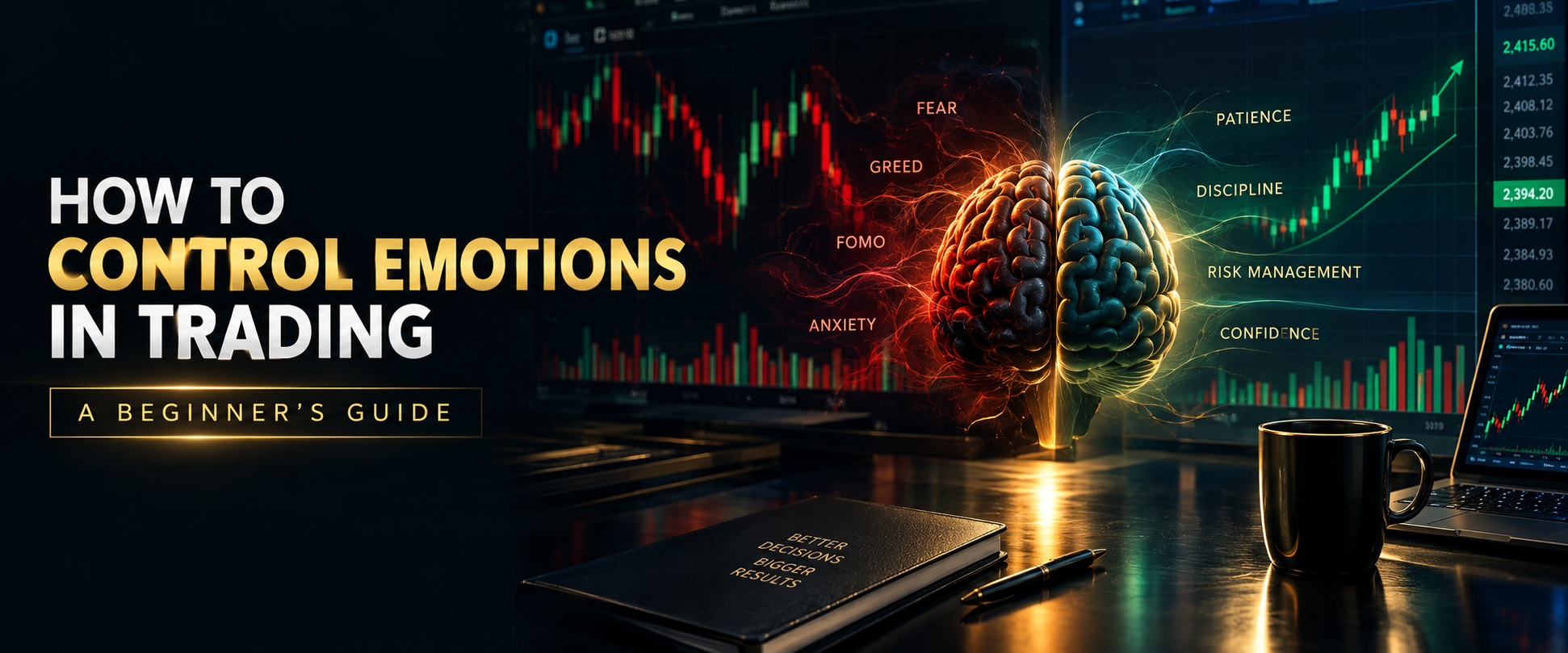
Trading is not just about charts and numbers. It is also about how you feel while you trade. Many new traders lose money not because they lack knowledge, but because their emotions take over. Learning to control emotions in trading is one of the most important skills a beginner can build.
In this guide, we will explain why emotions matter, which emotions affect traders the most, and how to control emotions while trading with simple, practical steps.
Why Do Emotions Matter in Trading?
Every trade you open is connected to a decision. And every decision is influenced by how you feel at that moment. If you feel scared, you might close a trade too early. If you feel excited, you might take a trade without checking your plan properly.
Emotions are natural. You cannot remove them completely. But you can learn to notice them and stop them from controlling your actions. This is what separates a beginner from a disciplined trader.
What Are the Most Common Trading Emotions?
Here are the most common trading emotions that almost every trader experiences, especially in the beginning.
Fear Fear shows up when the market moves against you. For example, a trader buys a stock, and the price starts falling. Fear pushes them to sell quickly, even if the original plan said to wait.
Greed Greed appears when a trade is doing well. A trader might think, “It’s still going up, let me hold a little longer,” and end up giving back the profit when the price reverses.
FOMO (Fear of Missing Out) FOMO happens when a trader sees a stock or currency moving fast and jumps in without any analysis, just because they don’t want to miss the move.
Frustration After a losing trade, frustration can build up. This often leads to rushed decisions to “fix” the loss quickly.
Overconfidence After a few winning trades, a trader may feel unstoppable. This can lead to taking bigger risks than usual, without proper reason.
Anxiety Anxiety often comes from watching the screen too much. Constantly checking price movements can make a trader nervous and lead to early exits or impulsive trades.
How Do Emotions Affect Trading Decisions?
When emotions take over, trading decisions usually go wrong in similar patterns:
- Entering trades without a plan – jumping in because of excitement or panic, not analysis.
- Closing trades too early – fear makes traders exit before the trade has time to work.
- Holding losing trades – hope makes traders wait too long, hoping the price will turn around.
- Taking too many trades – boredom or frustration leads to overtrading.
- Increasing risk after a loss – trying to “win back” losses quickly, often called revenge trading.
Recognizing these patterns is the first step. Once you know what emotional trading looks like, it becomes easier to catch yourself before making the same mistake again.
How to Control Emotions in Trading
Emotional control in trading is a skill, and like any skill, it can be built with practice. Here are steps that work well for beginners:
- Create a trading plan – Decide your entry, exit, and risk before you open a trade. A plan removes guesswork in the moment.
- Set risk limits – Decide how much you are willing to risk on each trade, and never go beyond that amount.
- Use a stop loss – A stop loss protects you automatically, so you don’t have to make a stressful decision while the trade is running.
- Avoid overtrading – Taking fewer, well-planned trades is better than taking many random ones.
- Take breaks – Step away from the screen after a loss or a big win. A clear mind makes better decisions.
- Follow a routine – A fixed trading routine reduces impulsive behavior.
- Keep a trading journal – Write down your trades and how you felt during them. Patterns will start to appear over time.
- Accept losses as part of trading – Losses are normal. No trader wins every time. Accepting this reduces the emotional impact of a loss.
How to Stay Calm During a Losing Trade
Watching a trade move against you can be stressful, especially for beginners. Here is what can help:
Remind yourself that this is exactly why you set a stop loss. Trust the plan you made before emotions got involved. Avoid moving your stop loss further away just because you hope the price will recover. This usually turns a small loss into a bigger one. If the pressure feels too much, step back from the screen for a few minutes. A short break can help you think clearly instead of reacting emotionally.
How to Avoid Revenge Trading
Revenge trading happens when a trader tries to “get back” money lost in a previous trade, usually by taking a bigger and riskier trade right after a loss. This is one of the fastest ways to turn a small loss into a big one.
To avoid revenge trading:
- Set a rule to stop trading for the day after a certain number of losses.
- Never increase your position size just to recover a loss.
- Give yourself time to calm down before opening the next trade.
- Review your trading journal instead of jumping straight back into the market.
How to Build a Strong Trading Mindset
A strong trader mindset is built on four things: patience, discipline, consistency, and realistic expectations.
Patience means waiting for the right setup instead of forcing a trade. Discipline means following your plan even when emotions are pulling you in another direction. Consistency means applying the same rules every time, not just when you feel confident. And realistic expectations mean understanding that trading is not a way to get rich overnight. It takes time to learn, and losses are part of that learning process.
Common Mistakes Beginners Make With Trading Emotions
Many beginners repeat the same emotional mistakes:
- Checking the price every few minutes – This increases anxiety. Solution: check trades at set intervals, not constantly.
- Moving stop losses during a trade – This is usually driven by hope. Solution: set your stop loss before entering and leave it alone.
- Trading right after a loss – This often leads to revenge trading. Solution: take a short break before your next trade.
- Copying other traders’ trades out of FOMO – This skips your own analysis. Solution: only take trades that fit your own plan.
How a Trading Journal Can Help Control Emotions
A trading journal is more than a record of profit and loss. It is a tool for understanding yourself as a trader. Every time you take a trade, write down why you took it, what emotion you felt, and what happened afterward.
Over time, you will start noticing patterns. Maybe you always lose money when you trade out of frustration. Maybe your best trades come when you follow your plan calmly. This kind of self-awareness is one of the most effective ways to improve your trading psychology over time.
At Daily Dunia, we often remind readers that the numbers on your screen are only half the story. The other half is how well you manage your own reactions to them.
If you want more simple lessons like this on trading and finance, you can also follow Daily Dunia on Instagram Bull & Bear Whispers for short, easy-to-understand posts on trading and money topics.
Final Thoughts
Controlling emotions in trading is not about becoming emotionless. It is about noticing your emotions and not letting them make decisions for you. A solid trading plan, proper risk management, and a habit of self-reflection through journaling can help any beginner trade with more discipline and less stress.
Trading is a skill built over time. Focus on managing your emotions and following your plan, and the results will follow.