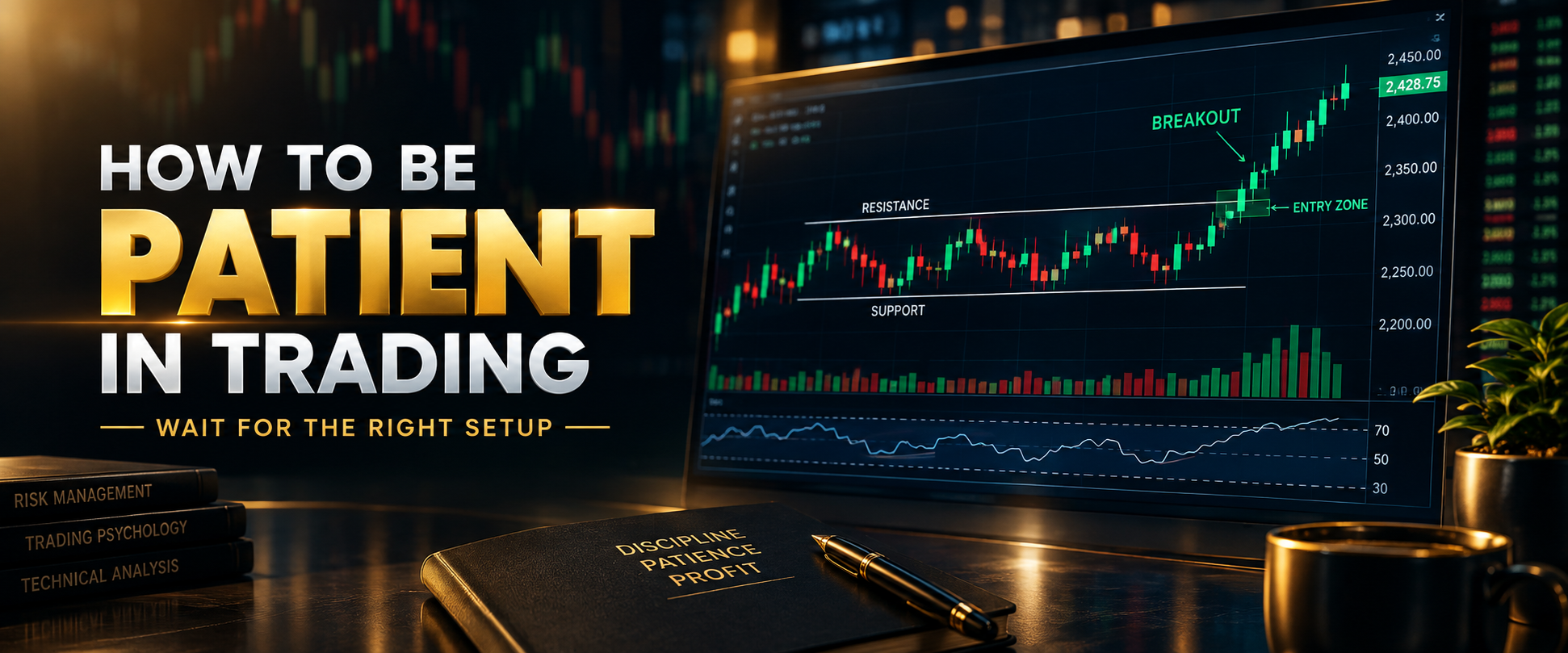
If you have ever closed a trade too early, jumped into the market out of boredom, or entered a trade just because you were afraid of missing out, you already know how hard patience in trading can be. Most beginners assume that trading success comes from finding the “perfect” strategy. In reality, a huge part of success comes from something much simpler: waiting.
This guide will help you understand why patience matters, why it’s so hard for beginners to develop, and what you can actually do to build it, step by step.
What Does Patience Mean in Trading?
Patience does not mean sitting and doing nothing all day. It means waiting for the market to give you a setup that actually matches your plan, and then acting on it with confidence.
A patient trader is not lazy or passive. They are simply refusing to act until the conditions are right. Think of it like fishing. A patient angler doesn’t throw the line randomly every few seconds. They wait quietly until they see the right sign, then they act quickly and decisively. Trading works the same way. Trading patience is about timing your action, not avoiding action altogether.
Why Is Patience Important in Trading?
Patience affects almost every part of a trader’s decision-making process. Here’s how it helps:
- Avoiding impulsive decisions. When you wait instead of reacting emotionally, you give yourself time to think clearly.
- Following your trading plan. A trading plan only works if you actually stick to it, and patience makes that possible.
- Avoiding unnecessary trades. Not every price movement needs a reaction from you.
- Controlling emotions. Fear and excitement often push traders into decisions they later regret.
- Improving overall discipline. Consistent, patient behavior over time builds better trading habits.
If you want to understand how emotions tie into all of this, our article on What Is Trading Psychology and Why Is It Important? covers the basics in more depth.
Why Do Beginners Struggle With Patience?
New traders often struggle with patience for reasons that have nothing to do with the market itself:
- They want quick results and get frustrated when profits don’t come fast.
- They feel the fear of missing out, worrying that a big move is happening without them.
- They get bored during quiet market periods and feel the urge to “do something.”
- A recent loss makes them want to jump back in immediately to make it back.
- Seeing other traders post profits online creates pressure to act right away.
- They assume every single day must offer a good trading opportunity, when in reality, many days don’t.
This last point trips up a lot of beginners. Some days, the best trade is no trade at all.
How Does Impatience Affect Trading Decisions?
When impatience takes over, trading decisions usually get worse. Here’s what that can look like:
- Entering a trade too early, before your setup is actually confirmed
- Taking low-quality setups just to feel like you’re “in the game”
- Overtrading, or placing far more trades than your plan calls for
- Chasing the market after missing a move, hoping to catch up
- Ignoring risk management rules because you’re in a rush
- Breaking your own trading rules “just this once”
Our guide on How to Avoid Overtrading: A Beginner’s Guide goes into more detail on how impatience often leads directly to overtrading.
How to Be More Patient in Trading
Patience is a skill, and like any skill, it can be built with practice. Here are steps that actually help:
- Create a clear trading plan. Know exactly what you’re looking for before you open a chart.
- Set entry and exit rules in advance. This removes the guesswork in the heat of the moment.
- Wait for your setup. If the conditions in your plan aren’t met, don’t force a trade.
- Accept that not every day needs a trade. Some days, the right move is to stay out of the market.
- Limit unnecessary screen time. Watching charts all day increases the temptation to act impulsively.
- Focus on the process instead of quick results. Judge yourself on how well you followed your plan, not just on profit or loss.
These steps sound simple, but consistency is what makes them work. Small, repeated actions build a patient trader mindset over time.
Learn to Wait for the Right Trading Setup
A “setup” is simply a specific combination of conditions that tells you it might be a good time to enter a trade, based on your own strategy. It could involve price reaching a certain level, a pattern forming, or a particular signal lining up with your rules.
Waiting for your setup means you’re letting the market come to you, instead of forcing a trade just because you feel like doing something. This single habit, more than almost anything else, separates disciplined traders from impulsive ones. If your setup isn’t there, the smartest move is often to simply wait.
Patience and Trading Psychology
Patience is closely tied to your emotions. Fear can push you to exit too early or avoid good trades altogether. Greed can push you to hold on too long or take on too much risk. FOMO can make you jump into a trade you haven’t properly analyzed. Frustration after a loss can lead to revenge trading. Overconfidence after a win can make you skip your own rules.
Understanding these emotional triggers is a core part of patience in trading psychology. If you’d like to go deeper into specific emotions, check out our articles on Fear and Greed in Trading: How Emotions Affect Your Decisions and What Is FOMO in Trading and How Can Traders Avoid It?
Use a Trading Journal to Build Patience
One of the most practical tools for building patience is a simple trading journal. After each trade, write down:
- Why you entered the trade
- Whether you followed your plan
- How you felt before, during, and after the trade
- Whether impatience played any role in your decision
- What you learned from the experience
Over weeks and months, patterns will start to appear. You might notice that your worst trades often happen when you felt bored or rushed. Recognizing this is the first step toward changing it.
Common Patience Mistakes Beginners Make
Even traders who understand the theory still fall into these traps:
- Trading simply because they’re bored, not because there’s a real opportunity
- Entering a trade just because the price is moving fast
- Chasing a trade they missed, instead of waiting for the next setup
- Taking revenge trades to make up for a previous loss
- Changing their entire strategy after just a few losing trades
- Expecting constant action, when calm periods are a normal part of trading
Recognizing these patterns in yourself is far more useful than reading about them once and forgetting. For more on staying consistent day to day, see our guide on How to Stay Disciplined in Trading: A Beginner’s Guide.
Final Thoughts
Patience is not something you build overnight, and it is not something that ever becomes perfect. Even experienced traders slip up occasionally. What matters is that you keep coming back to your plan, keep learning from your mistakes, and keep prioritizing the process over quick results.
How to be patient in trading ultimately comes down to a simple idea: wait for the right setup, follow your rules, and trust that consistency matters more than speed. As the Financial Industry Regulatory Authority (FINRA) notes, having a clear plan and understanding your own risk tolerance are foundational parts of responsible trading behavior, and that foundation is impossible to maintain without patience.
For more beginner-friendly lessons on trading psychology and discipline, follow Bull & Bear Whispers on Instagram for regular educational content on trading and finance.
This article is for educational purposes only and should not be considered financial advice. Trading involves risk, and past performance does not guarantee future results. Always do your own research or consult a licensed financial advisor before making trading decisions.
Want more practical lessons like this one? Follow the Daily Dunia WhatsApp Channel here to get regular updates on trading psychology, discipline, and finance education.