

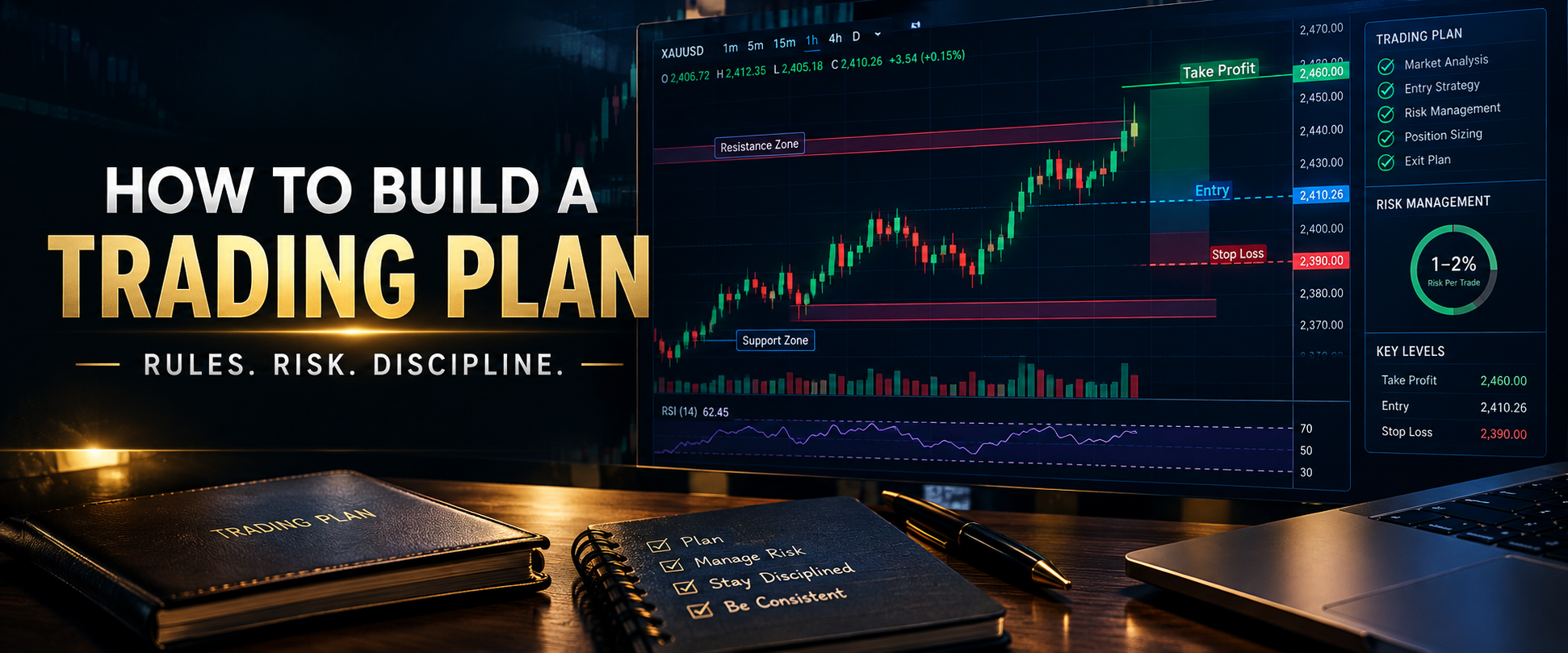
How to Build a Trading Plan: A Beginner’s Guide
Trading can feel exciting. But without a clear plan, it can also feel confusing. Many new traders jump in without knowing what to do first. This is why a trading plan is so important.
A good trading plan helps you stay calm. It helps you make smart choices. And it helps you avoid costly mistakes. In this guide, you will learn what a trading plan is, why it matters, and how to build one step by step.
What Is a Trading Plan?
A trading plan is a simple set of rules. These rules tell you what to trade, when to trade, and how much money to risk.
Think of it like a map. Before you go on a trip, you plan your route. You know where you are going and how you will get there. A trading plan works the same way. It guides your actions before, during, and after a trade.
Without a plan, traders often make decisions based on feelings. This can lead to big losses. A written plan keeps you focused on facts, not emotions.
Why Is a Trading Plan Important?
A trading plan is important because it builds discipline. Discipline means following your rules, even when it feels hard.
Here is why a plan helps:
- It reduces emotional decisions.
- It keeps your trading consistent.
- It helps you manage risk.
- It gives you a way to measure progress.
New traders often lose money not because they picked the wrong trade. They lose money because they had no rules to guide them. A trading plan fixes this problem.
If you want to understand trading from the very beginning, check out our guide on what is trading for a simple introduction.
What Should a Trading Plan Include?
A complete trading plan should cover a few key parts. These include:
- Trading goals – What do you want to achieve?
- Markets to trade – Stocks, forex, crypto, or something else.
- Trading timeframe – Short-term or long-term trades.
- Entry rules – When you will start a trade.
- Exit rules – When you will close a trade.
- Stop-loss rules – How you will limit losses.
- Risk management – How much you are willing to risk.
- Position size – How much money goes into each trade.
- Trading schedule – When you will trade and review your work.
Each part works together. If one part is missing, your plan will feel incomplete.
How to Build a Trading Plan Step by Step
Building a trading plan does not need to be hard. Follow these simple steps:
- Write down your goals. Be honest about what you want.
- Choose your market. Pick one market to start with.
- Decide your timeframe. Choose short-term or long-term trading.
- Set your entry and exit rules. Know exactly when to act.
- Add risk management rules. Protect your money first.
- Write your schedule. Set specific times to trade and review.
- Test your plan. Try it on paper before using real money.
- Review and adjust. Improve your plan as you learn.
Taking these steps one at a time makes the process much easier.
Set Clear Trading Rules
Clear trading rules are the heart of any trading plan. Without rules, traders often guess. Guessing leads to mistakes.
For example, instead of saying “I will sell when it feels right,” a rule-based trader says, “I will sell when the price drops 5% below my entry point.”
This small change makes a big difference. Rules remove guesswork. They also stop you from changing your mind in the middle of a trade.
Include Risk Management in Your Trading Plan
Risk management means protecting your money. This is one of the most important parts of any trading plan.
Here are simple risk management rules beginners can use:
- Never risk more than 1–2% of your account on one trade.
- Always use a stop loss.
- Avoid putting all your money into one trade.
- Only trade money you can afford to lose.
To learn more about this topic, read our full guide on risk management in trading.
Add Entry and Exit Rules
Entry and exit rules tell you exactly when to act.
Example:
- Entry rule: Buy when the price breaks above a key resistance level.
- Exit rule: Sell when the price reaches your target profit or hits your stop loss.
This example is simple, but it shows the idea. Clear rules take away confusion. You always know your next step.
You can also learn what a stop loss in trading is and how it protects your capital.
How a Trading Plan Helps Control Emotions
Trading brings up strong feelings. Fear can make you sell too early. Greed can make you hold too long. FOMO, or “fear of missing out,” can push you into bad trades.
A trading plan helps control these emotions. When you already know your rules, you do not need to make decisions in the heat of the moment.
For more on this, see our article on fear and greed in trading and how emotions affect your decisions.
Learning to manage emotions is part of building trading psychology, which works hand in hand with your trading plan.
Common Trading Plan Mistakes Beginners Make
Even with a plan, beginners can make mistakes. Watch out for these common ones:
- Having no clear rules. A vague plan is not a real plan.
- Changing the plan after a loss. One loss does not mean your plan is wrong.
- Risking too much. Large risks can wipe out your account fast.
- Trading too often. Overtrading often leads to poor decisions. Learn more about how to avoid overtrading.
- Following other people’s signals. Your plan should be your own.
- Expecting guaranteed profits. No plan guarantees success.
Avoiding these mistakes takes patience. If you want tips on staying calm, read our guide on how to be patient in trading.
By the way, if you enjoy simple, easy-to-understand trading tips, follow Daily Dunia on Instagram for more beginner-friendly content.
How to Improve Your Trading Plan Over Time
Your first trading plan will not be perfect. That is normal. The key is to improve it over time.
Here is how:
- Keep a trading journal. Write down every trade you make.
- Review your wins and losses each week.
- Look for patterns in your mistakes.
- Update your rules based on what you learn.
According to Investopedia, reviewing and refining your trading plan regularly is one of the best habits a trader can build.
Small improvements add up. Over time, your plan will become stronger and more reliable.
Final Thoughts
A trading plan is one of the most valuable tools for any beginner. It brings structure to a world that can feel unpredictable. It also helps you build a strong trading mindset based on discipline, not emotion.
Remember, trading is not about guaranteed profits. It is about making smart, informed decisions using clear rules. Focus on risk management, stay patient, and follow your trading plan even when it feels hard.
At Daily Dunia, we believe that learning the basics is the first step toward becoming a more confident trader.
Follow the Daily Dunia WhatsApp Channel for more beginner-friendly guides and trading tips: Bull & Bear Whispers


